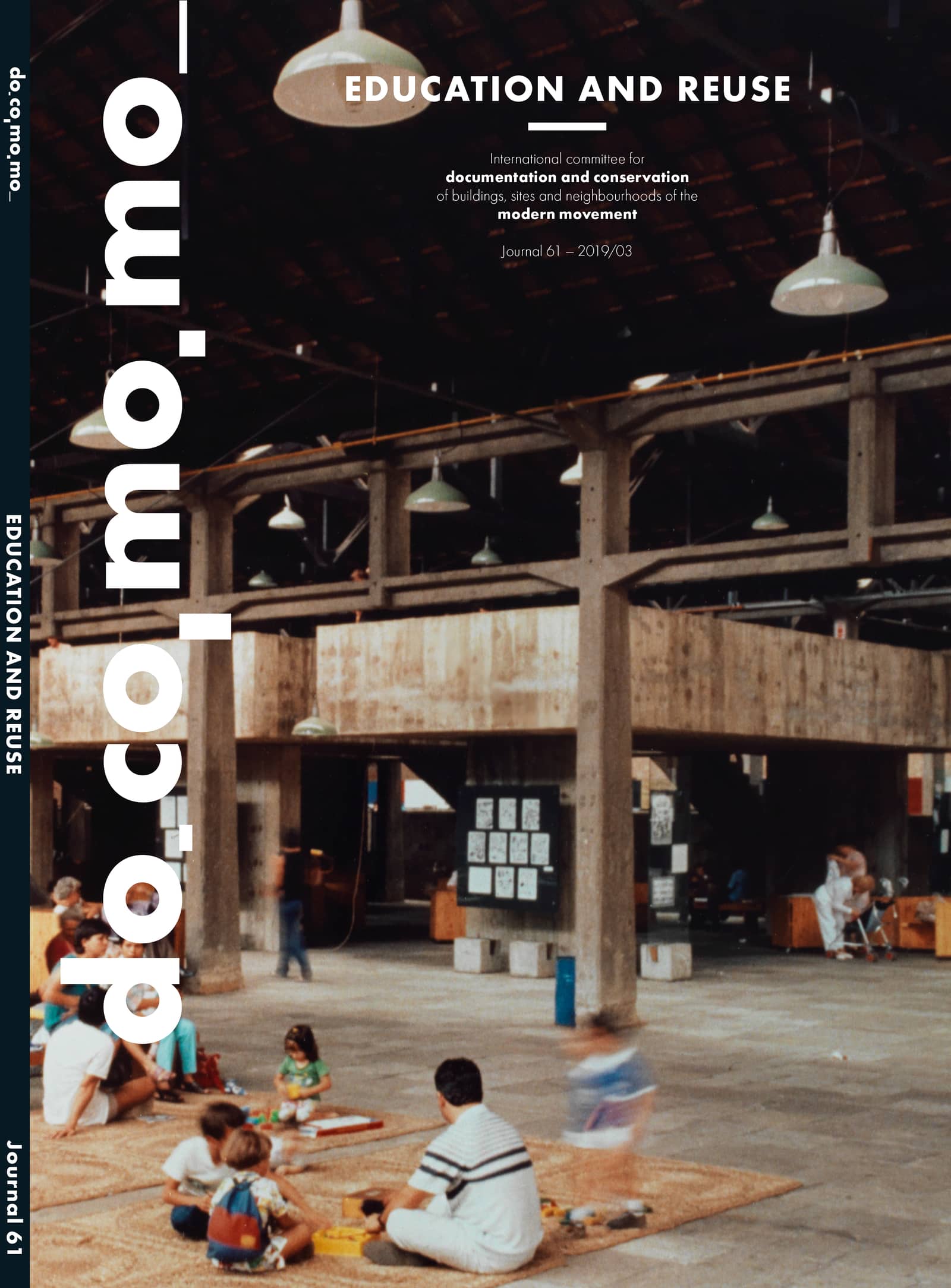
Cover ”Education and Reuse” – Journal Nr. 61 © Grafik: docomomo international, 2019
DOCOMOMO Journal 61
Modern Reuse: Reimagining Modernism in the Circular Age
In his essay Modern Reuse, Robert K. Huber presents a critical examination of modernist architecture through the lens of contemporary reuse practices. Published in Docomomo Journal No. 61, the article delves into the intricate relationships between material, information, and message within the context of modernism’s legacy. Huber argues that understanding these interconnections is essential for developing a cultural practice of modern reuse that resonates with the values of a circular society.
Key Themes and Concepts
Material, Information, and Message
Huber explores the triadic relationship between the physical materials of modernist buildings, the information they convey, and the messages they impart. He posits that these elements are not merely components of architectural form but are imbued with cultural significance that can inform contemporary reuse strategies. By analyzing the genesis of these values, Huber advocates for a nuanced approach to adaptive reuse that acknowledges the socio-cultural narratives embedded in modernist structures.
Modernism’s Legacy and Circular Society
The essay situates modernist architecture within the broader discourse of sustainability and circularity. Huber contends that the principles of modernism—such as industrial production, standardization, and mass production—offer valuable insights into contemporary challenges related to resource efficiency and environmental stewardship. He suggests that reinterpreting modernist ideals can contribute to the development of a circular society that harmonizes ecological, economic, and cultural considerations.
Experimental Projects as Methodology
Huber’s examination is grounded in experimental projects that bridge research, practice, and conceptual art. He references initiatives like Bestandsverpflanzung (2008) and the ongoing Bauhaus Reuse project (2019) as exemplars of how architectural experimentation can facilitate a deeper understanding of modernism’s relevance in the present. These projects serve as platforms for testing hypotheses about materiality, heritage, and societal values, thereby informing the discourse on modern reuse.
Educational Implications
The essay underscores the importance of education in fostering a culture of modern reuse. Huber highlights the role of academic institutions in cultivating critical thinking and methodological approaches to adaptive reuse. By integrating these themes into curricula, educators can equip future architects and planners with the tools necessary to navigate the complexities of preserving and repurposing modernist heritage.
Huber’s Modern Reuse offers a thought-provoking analysis that challenges prevailing notions of architectural preservation and reuse. By advocating for a holistic understanding of modernism’s material, informational, and symbolic dimensions, the essay contributes to the ongoing dialogue about sustainable practices in the built environment.
For further reading, the full essay is available in Docomomo Journal No. 61, accessible here: docomomojournal.com.